MOTEL

A piece of microfiction from Barry’s site:

Barry Lee Thompson's avatarBarry Lee Thompson

He stopped swimming, and floated in the middle of the pool. I watched him closely, the long thin line of body broken by the blue of his swimming trunks. Then I imagined the trunks gone. It was easy, really, but almost unbearable. He started to swim again, towards me, then tumbled over at the end, and started up the other way. And he kept on, lap after lap. It was good to watch. Mesmerising. But that’s all it was. Over and over. I became a little bored. Maybe not bored, but it wasn’t going anywhere, so I went inside to break it up, and I bought a coffee and a sandwich from the vending machines. I took them back out to the pool, to where I’d been sitting. But it had all changed. The water was flat and still. The pool, empty. He was gone, the swimmer. He would have…

View original post 128 more words

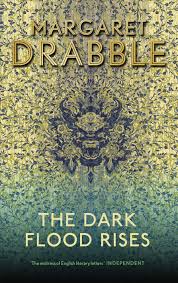
Margaret Drabble: The Dark Flood Rises

“There is no plot, and there doesn’t need to be.”
A review of Margaret Drabble’s ‘The Dark Flood Rises’ from Jennifer’s site:

Jennifer Bryce's avatarlittlesmackerel

Drabble 2

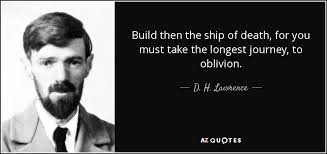
Margaret Drabble’s most recent novel weaves around De Beauvoir’s observation that with people living longer ‘their idleness [is] all the harder to bear . . . mere survival is worse than death’. The main character in this book is Fran, in her seventies, ‘too old to die young’. She is not idle – she works as an inspector of nursing homes and is thus in a position to muse about the various arrangements of the characters in this book – all connected by blood or friendship. There is no plot, and there doesn’t need to be. Each character has a different way of coping with their ‘long journey towards oblivion’, (from D.H. Lawrence’s The Ship of Death).

Drabble 1

The book’s title comes from this poem:

Piecemeal the body dies, and the timid soul

has her footing washed away, as the dark flood rises.

the ship of death 2

The title, for this reader, also suggested…

View original post 270 more words

SPEAKING IN TONGUES: THE MUSIC OF TIM DARGAVILLE

From Jennifer’s website:

Jennifer Bryce's avatarlittlesmackerel

A month or so ago I wrote of the first concert presented by an exciting new enterprise in Melbourne, the New Music Studio of the Melbourne Conservatorium of Music. Just recently, in the Salon of the Melbourne Recital Centre, the group presented music of Australian composer Tim Dargaville.

Tim Dargaville

The first three pieces referenced Tim’s special interest in Indian music –  particularly drumming. Indeed at the opening of Kolam, for saxophone quartet, Tim seemed to speak in tongues when he vocalised in a kind of drumming language. A kolam is a mandala-like drawing composed of a continuous line curving around a matrix of dots.  The traditional mandala, fashioned with rice, was usually at the entrance to a home; it was walked on and disappeared by the end of the day, so the next day another one would be made. This idea of continuity was apparent in the shape of the…

View original post 368 more words

‘Tis Pity: An Operatic Fantasia on Selling the Skin and the Teeth

From Jennifer’s website:

Jennifer Bryce's avatarlittlesmackerel

As expected, this was a refreshing beginning to the Vic Opera 2017 season. Vic Opera can be relied upon to come up with original, fresh offerings, leaving traditional grand opera to other companies. So one goes to a Vic Opera performance with open ears and an open mind.

The title comes from a play, written close to Shakespeare’s time: ‘Tis Pity She’s a Whore, by John Ford, written in 1633. As with the two other productions of hers I’ve seen (Die Sieben Todsunden, Brecht/ Weill and Music of Berlin – with Barry Humphries), Meow Meow was the centre-piece. The production probably couldn’t have come off without her. According to the program notes, director/ writer Cameron Menzies was inspired by working with Meow Meow on the Brech/Weill production and this led to the idea of a show about the history of prostitution. He worked on this concept with Richard Mills…

View original post 358 more words

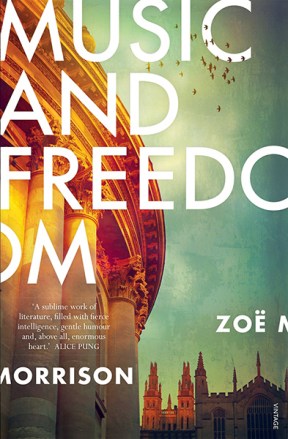
Zoe Morrison: Music and Freedom

The latest from Jennifer’s blog.

Jennifer Bryce's avatarlittlesmackerel

This first novel of Zoe Morrison has helped me to pursue my interest in the challenges faced by women artists in the first half of the 20th century – the challenges of being assumed to be second-rate compared to men, of believing that home-making should have priority over piano practice, of being dependent on men for money. Recently I’ve been interested in the lives of Australian pianists from that time: Margaret Sutherland and Eileen Joyce. Although these women weathered considerable difficulties, they had a better time than the fictitious Alice Murray in Zoe Morrison’s book.

zm-cover-600px-x2

Alice grew up on an orange orchard somewhere near Mildura. A difficult childhood was on the cards, with isolation, poverty and her parents’ deteriorating marriage. But Alice’s mother recognised that her young daughter was a gifted pianist and (finding the money somehow) sent her off to boarding school in England.

Alice would have been…

View original post 796 more words

Front of the house

A short piece of fiction from Barry’s blog.

Barry Lee Thompson's avatarBarry Lee Thompson

Look at him working. The way he smiles at every customer. He’s impeccable. But when he goes to his room at the back, at the side of the kitchen, the smile is gone. He sips clear liquor from a teacup, swears under his breath, and watches everything through the small glass in the door. When he sees a new customer, he’s out to greet them, bounding over, showing them to a table. Then as he bows slightly, moving away, he nods to a waiter to bring menus, water. He returns to his room, sits down, stares through the glass, sips at the liquor. No one would ever guess. He seems impeccable.

View original post

Ian McEwan: Nutshell

Jennifer Bryce's avatarlittlesmackerel

The central idea for this short novel is from Hamlet: ‘Oh God, I could be bounded in a nutshell and count myself a king of infinite space – were it not that I have bad dreams.’ The story is narrated (soliloquized) by a foetus Hamlet, whose mother is Trudy (as in Gertrude) and her lover is Claude (as in Claudius). The foetus  eavesdrops on the plot of the lovers to do away with the father (a poet), so that the two can be together without his intrusion.  It’s a clever idea. I’m sure that McEwan did his usual painstaking research so that the cramped environment from which the foetus narrates the story is accurate. Although, how a foetus could have any brain cells left after the huge amount of alcohol (including spirits) consumed by his mother, I don’t know. The whole thing is referenced, perhaps too nicely, to the play – the…

View original post 245 more words