Exploring Diverse Poetry Forms: Insights from Helen McDonald

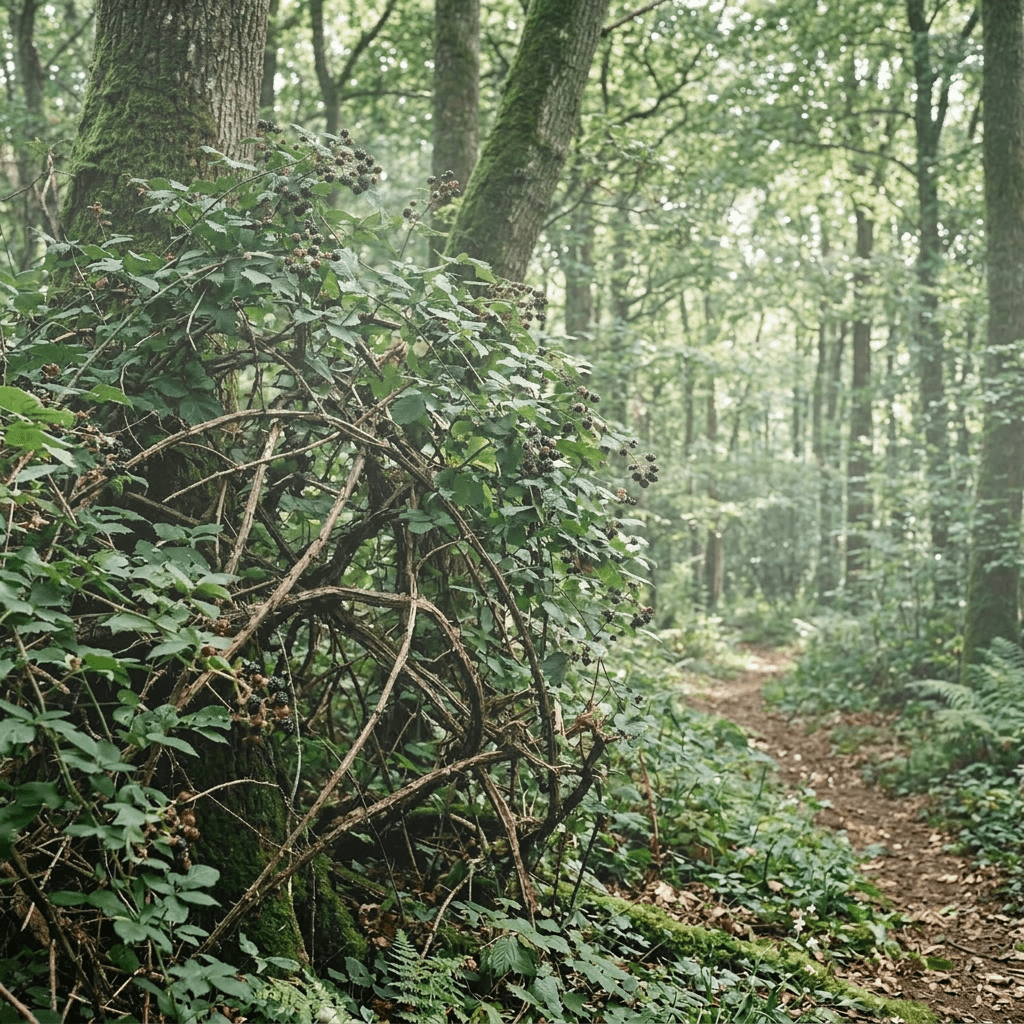
Forest path with blackberry bushes and tall moss-covered trees

Congratulations to Helen on the publication of her poem ‘The Drive out West’ in the latest edition of Catchment Poetry of Place, an online literary journal, published June 21st [click here to read].

In today’s blog post, Helen shares her experiences of writing across different poetry formats to best express her particular responses, thoughts and observations.


Helen writes:

Last year in the lead up to the Christmas juggernaut I was delighted to have two very different poems accepted for publication in two online journals, featuring vastly different genres, though both referencing a sense of place.

We had just moved from a geographical location that I had wanted to write about at length. It felt right to express, in long form free western verse, what that magical place had meant to me for over 30 years. It gave me wide scope for my thoughts to wander without a tight structure to rein in those emotional responses. You can read my poem ‘Tink Tink’ in the December edition of Catchment Poetry of Place [click here]

At the same time, I was also mourning the death of my mother following a protracted period of exhausting health challenges for her. I did not want to write at length about any of this. It was all too painful.

On one occasion, I was on a ginko walking through nature with fellow writers observing and writing whatever thoughts entered my head.  In a peaceful part of a forest I stumbled on a gnarly old blackberry bush. This somehow triggered a second image I was cradling in my mind and heart, seemingly quite separately. It was clear to me that the short form Japanese haiku poetry was exactly the right framework in which I could observe the imagery within that one moment. 

You can read my haiku published in Echidna Tracks winter online journal [click here].

Working across different genres of poetry is something that interests me greatly, giving multiple freedoms for expressing exactly what it is that I want to convey. Form is crucial for me. 

Haibun and Pantoum are two other styles I have experimented with in other poems, not to mention the tricky Villanelle. I currently read and study the complex Japanese Tanka poetry and have yet to master, or even understand, the subtleties of this ancient writing craft. 

However, that is for another time and another post, though I feel there is a long road ahead before I gain a grasp on these enigmatic poetry forms.

The Unique Power of the Spoken Word, by Helen McDonald

I don’t know where the last few weeks have gone since the phenomenal success of the 100th Chamber Poets was celebrated at Woodend’s RSL club. I think I’m still soaking up and processing the wonderful atmosphere of the spoken-word event. The 100th celebration drew a crowd of no less than 100 enthusiastic poets and poetry lovers to listen to some of Australia’s most lauded poets – including Andy Jackson, Kevin Brophy, Es Fung, Joe Dolce, Gaylene Garbis, Ross Donlon, and the legendary Pi O – spin and weave their beautiful, funny, heart-wrenching, poignant, politically charged and piercingly honest poems.

We are currently bunkered down in the Macedon Ranges, experiencing our coldest winter for many years, and we have yet another much-loved Chamber Poets afternoon of poetry reading to keep our hearts warm this coming Saturday, July 13th.

There is really nothing like the spoken word – it has the power to draw an audience into a kind of magic circle that unites and holds it spellbound, addressing as it does both the personal and universal experiences common to humanity.

For the poet, the experience of reading aloud to a gathering is very different from sending out work on the written page for the reader to interpret as they choose. I was recently delighted to have my poem ’Crossing the Fitzroy’ published in online journal Catchment – Poetry of Place (click here to read) after a marvellous exchange with its editor Rodney Williams. I had originally written what I thought was a haibun, a Japanese poetry form comprising a piece of prose followed by a haiku, which has its own unique structure on the page. This in itself informs how the poem is read aloud. Though satisfied that my words expressed the sentiments I needed to put down on paper, when I read the piece aloud I somehow couldn’t quite get the phrasing to sound as I wanted. 

Working with Rodney and his incredibly helpful suggestions, and using exactly the same words, I came to realise that my haibun form was masking a poem of free Western verse. Not only did the visual effect of the revised poem work more effectively but, importantly, the way I now read my piece aloud – the phrasing, pausing and emphasis – came far more naturally. This of course will influence the way my words resonate with the listener as I come to share my profound experience of travelling in the Kimberley region on Aboriginal Bunuba country.

There is a world of difference between the look of a poem and its telling, but in both instances, once seen or heard, the individual can take from the poem whatever meaning they will. It no longer belongs just to the poet.

Such is the power of the spoken word.

Helen McDonald