This Friday at 8:00 PM (AEST), Vision Australia Radio is broadcasting a special edition of Cover To Cover to mark the centenary of the end of the First World War. The entire program features work from the Elwood Writers.
Join us as Jennifer reads an extract from her novel set just after World War I, and a short story set in England at the time of the war. Helen reads ‘Reflections on My Grandpa’, a factual account of her grandfather’s experiences during the First World War and after. ‘Down to the Sea’ features Margaret’s memories of her grandfather, who had been a surgeon at Gallipoli. In Barry’s short story ‘Chloe’, a newly enlisted soldier is captivated by a portrait on the day he leaves home to serve overseas.
You can listen on the radio in Australia, or online from anywhere in the world. The program will be repeated on Sunday 11 November at 1:30 PM (AEST), and available shortly afterwards as a podcast. For listening and other information and streaming links, visit the Vision Australia Radio website, here.
We hope you can make it, and look forward to your company.
Cover To Cover is produced and presented by Tim McQueen in the studios of Vision Australia Radio in Melbourne.
This recent post from Jennifer’s website includes details of a special Armistice Day edition of Cover To Cover on Vision Australia Radio. The program will feature work from Elwood Writers, and will be broadcast this Friday 9 November, repeated Sunday 11 November.
For much of my life World War I has hung in the dim past; a brown and white strip of celluloid showing huge, cumbersome guns, and soldiers marching through mud, sometimes at a pace speeded up by old movie film. People in my immediate family didn’t talk about it much, although my grandfather was there, […]
Just a reminder that if, like me, you weren’t able to tune into this week’s Cover To Cover from Vision Australia Radio on Friday evening, there’ll be another chance to catch the program this afternoon at 1:30PM (AEST). Join the team as they read stories by writers from all over the world, including The House […]
We’ll be popping the kettle on and settling in for just under an hour of delightful storytelling on Vision Australia Radio’s Cover To Cover at 1.30 this afternoon. Included in today’s program, repeated from Friday, is Tim McQueen reading Barry’s short story The House In The Sky.
Barry has asked us to reblog a post about his short story The House In The Sky being read on Vision Australia Radio’s Cover To Cover program this Friday, repeated Sunday. All details are in the original post, here:
My short story The House In The Sky will be read by Tim McQueen on Cover To Cover and broadcast on Vision Australia Radio this Friday, 2 November, at 8 PM (AEST), repeated Sunday 4 November at 1.30 PM (AEST).
Cover To Cover is produced and presented by Tim McQueen, and can be heard on the radio in Australia, or streamed online from anywhere in the world.
Radio frequency and other details and an online listening link can be found here:
My short story The Birthday was read recently on Vision Australia Radio’s weekly Cover To Cover literary program. The podcast of that week’s program is available here:
Elwood Writers recently held its Winter 2018 Soiree at St Kilda Library in Melbourne. Over four blog posts, each of the writers will tell us more about the work they presented at the event. We begin with Jennifer Bryce.
Elwood Writers soiree, St Kilda Library.
It’s daunting to get up in front of 30 or so people – even when they are friends – to read your own work. Daunting because what you’ve written is something of your own creation; you are vulnerable – you can see the response of the audience – it’s more immediate than receiving a critique (or a rejection notice) for something you’ve written.
But the experience of reading in a public setting is extremely valuable. We usually read work out aloud in our writing group meetings because we find that hearing our words brings out different aspects of a piece. You might have read a piece to yourself several times – but things jump out when you hear the words rather than just look at them. And when you know that it’s to be a public reading, you go through the work with a fine tooth comb.
Earlier this year I started work on my second novel. It is connected to the first (which is at present doing the rounds of publishers), but not necessarily a sequel. Publishers would classify it as historical fiction. For our Soirée I chose to read the very beginning of this new book. One reason for choosing the very beginning is that it should make sense to listeners without requiring any explanation.
I love to immerse myself in early 20th Century history – I’m intrigued to understand the world that existed just before I was born. In my new book a young woman travels to London in the 1930s to take up a scholarship at the Royal College of Music. So much happened at this time: World War II was brewing, Edward VIII was about to abdicate in order to marry a divorced woman (he also had Nazi sympathies), radio had developed and people liked to ‘listen in’ to news broadcasts and concerts.
My protagonist has completed a diploma at the conservatorium in Melbourne, but she is naïve to the extent that the trip to London on board the Strathnaver is indeed a rite of passage. She isn’t modelled on any particular person of that time although a few years earlier pianist Eileen Joyce had left Australia ultimately to become a celebrity known in films and on gramophone recordings as well as on the concert platform. Other young women, such as composer Miriam Hyde, also ventured overseas at that time because Australia was seen as a backwater and you had to study overseas to ‘make it’.
For the Soirée I divided the first chapter into two parts. In the first part, the ocean liner leaves Melbourne. The young musician is alone and she watches the coastline as the ship steams up Port Phillip Bay and through the heads. I have never travelled by ship, so I had to read memoirs and talk to people who had had the experience of a liner pitching in rough seas, sea-sickness, the layout of a large steamer. I found useful photographs on the Internet. In the second part, my protagonist has met one of her cabin mates (she is travelling tourist class and has to share a cabin with strangers) and they have dinner in the tourist class dining room. This part was assisted by an old menu I had from the time when my mother was taken overseas by her parents in 1939. Compared to today’s menus, the food was stodgy and plain – Brown Windsor Soup, roasts, caramel pudding.
I know, from experience, that this chapter will change a lot before I consider the piece to be ‘finished’ – indeed, is a piece of writing ever finished? But the challenge of reading at our Soirée meant that I gave the all-important opening chapter special attention.
My first novel took several years to write. I hope that the process will be a little shorter for my second. One thing I’m sure of is that in a year’s time the piece I read at our Soirée will be different. I hope that in a year’s time I will have finished a complete first draft of the novel. Even though I have a plan, it will change.
Duo con Brio, St Kilda Library.
At the Soirée I enjoyed the opportunity to play some music. Playing the oboe is an important part of my life and I’m in a chamber group: Trio con Brio. Our flautist has been unwell, so we were Duo con Brio: oboe and ’cello. We have found that some of Bach’s Two Part Inventions for keyboard work very well for this combination because Bach gives an interesting line to both treble and bass – it’s not a case of the ’cello plodding away and the oboe having all of the fun. We enjoyed playing some of these pieces in between literary items.
For more on Jennifer’s work, visit her website Little Smackerel.
At the end of August, Elwood Writers held a literary soiree in the community room at St Kilda Library in Melbourne. The event provided an opportunity for us to present a curated program of short readings from our own work, and included fiction, memoir, and poetry.
Duo con Brio, with Monica Edwards on cello and Elwood Writers’ Jennifer Bryce on oboe, punctuated the proceedings with musical pieces by Bach.
The set-up.
The program.
Duo con Brio, St Kilda Library.
The thank you for the music.
Audience.
The reading.
The reading.
The reading.
The page turning.
The pages gathering.
The interval.
We’ll provide more information on some of the work presented at the event in forthcoming blog posts. For now, wherever you are, happy reading and writing.
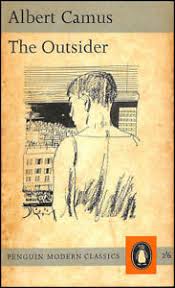
In Camus’s The Outsider, a nameless Arab is killed on a beach in Algeria. He is killed by Meursault, a man who seems to be totally lacking emotion. The first words of the novel, narrated by Meursault are: ‘Mother (or Maman – translated from French) died today.’ Stark and devoid of grief. Much later in the book, Meursault happens to be walking on a hot beach, holding a gun.
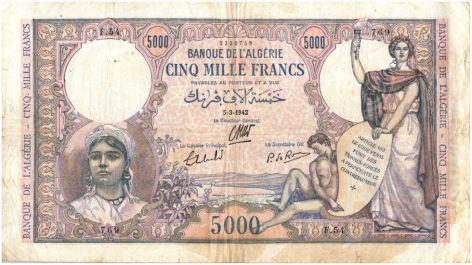
He sees the Arab man and kills him. My sense was that it was just because the man happened to be there and Meursault happened to be holding a gun – some say it was because the sun was in his eyes. There is no apparent motive. Callous indifference to Arab life? It was 1942, a time of resistance to the French rule that would continue until 1962.
… closed his eyes, slipped into a place. Into an easy unfettered place where a meadow slopes gradually down to a river. A narrow stretch of river through a town, old town, a university town. It’s summer, it’s evening. The air pale and yellow, viscous, an end of day light, settling. Trees, old buildings around. Medieval? He’s no expert. There’s a chapel. Means nothing, beyond its architectural beauty, compelling lines against the sky. The whole is more a sensation, a relief, but sometimes these call to be described and this is how it could be described. There’s not much more to say. An elusive episode. Something else. A word came to mind: infused. The yellow, perhaps, suggested the word. As if the air were infused with a gentle dye. Suffused might be more accurate, he’s not sure, but that wasn’t the word that came. What else? That’s it, really. Nothing…
A one page ad in a glossy magazine: image of a man sitting in a brightly lit theatre, looking towards an empty stage that’s framed by deep red curtains. There’s no one else around. His feet are up on the back of one of the seats in front. The man’s in casual daytime clothes. He’s wearing the fragrance that’s being advertised, thinking over the events of the afternoon. He’s been rehearsing the actors in his new play. This is Sweden, perhaps, and the theatre is in the middle of a small Swedish town. But the actors, they’re not very good. Or they’re not quite right, although they were the best from the auditions. He feels differently to yesterday. Not one of the actors has given any indication of really understanding the material, and he’s worried that its message might be getting lost. If only he’d stayed in the city where…



 Elwood Writers