Blog posts

Free Speech and Democracy: A Further Taste of Adelaide Writers’ Week

I go to Writers’ Week for a number of reasons. One is to identify as a writer and to get ideas about writing. Another is to give myself time to think, particularly about the world around me. Two sessions were inspirational for this latter purpose.

Clive Hamilton’s book Silent Invasion: Chinese Influence in Australia received publicity recently because a number of publishing houses were not game to publish it. Just over a week ago the book came out, thanks to publisher Hardie Grant. In this book Clive Hamilton examines the influence of the Chinese government in Australia. At the talk, he paid tribute to his researcher, Alex Joske.

Clive Hamilton 1

Most of us are aware of the consequences of some of the more blatant instances of politicians/ political parties accepting money from China. Clive Hamilton was convinced of the need to write this book at the time when (then) Senator Sam Dastyari became embroiled with such events. In the preface, Hamilton says: ‘China and Australian democracy had collided again. Something big is going on, I thought. I decided to investigate and write a book so that Australians could understand what has been happening to our country.’

Most of us are aware of the cases that have made news headlines, such as that of Dastyari, and the selling of the Port of Darwin. But in this book Hamilton reveals some of the more insidious happenings: Chinese students in Australia being prevented from protesting, CCP agents observing Chinese at their church services in Australia, the role of the CCP and the Chinese military in funding (and therefore having control over) some research in Australian universities. He also draws our attention to instances of Australia supporting the Chinese military, for example by building aircraft components.

Hamilton implied that Australia should see itself as a bigger player in international politics. He drew our attention to the fact that the GDP of Russia is the same as that of Australia, yet, he said, we think of Russia as a bear and Australia as a koala!

It was encouraging to see that there was a huge audience at this talk and there was a sense of mutual support and agreement that the criticism and anxiety raised by Hamilton writing this book sends a stark message about freedom of speech in Australia.

A.C. Grayling 1


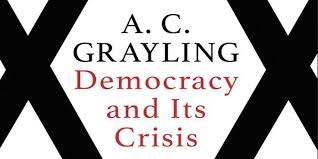
In another session, English philosopher A.C. Grayling and Australian journalist and political commentator George Megalogenis met to discuss Democracy and Populism. The introductory statement was that this is the 12th consecutive year that democracy has been in retreat around the world. How might this situation be reversed?

A.C. Grayling suggested that we must stop politics from being a career. As a ‘career’, the participants are more interested in keeping their jobs and their ratings than in thinking intelligently about the problems facing the country/ the world. He also suggested later that the role of a politician these days is not attractive to highly intelligent people, who can make more mark in the world and earn more money working in Silicon Valley.

What if the world just wants security and not the freedom of democracy? Grayling reminded us of the quote of Benjamin Franklin : Those who would give up essential Liberty, to purchase a little temporary Safety, deserve neither Liberty nor Safety.

Grayling reminded us that it is essential for people to feel that their vote counts.

George Megalogenis stressed the need for transparency in democracy, yet politicians now avoid ‘difficult’ journalists – they prefer to be seen doing the right things – it is easier to walk around a work site wearing high vis protection gear. Yet Megalogenis is hopeful that there is a new breed of younger politicians who can relate to younger people (under 45) because these politicians have grown up in the world that younger people understand.

Grayling finds encouragement in the young people in US currently campaigning for gun control.

A TASTE OF ADELAIDE WRITERS’ WEEK: DAY 1

Adelaide writers week 1

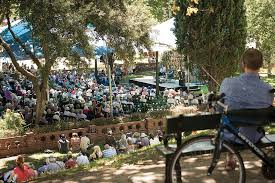
I’ve been coming to Adelaide Writers’ week with colleagues from Elwood Writers for the past three years now and it’s by far the best writers’ festival I’ve been to. Here I am again for Writers’ Week 2018. There are 14 sessions every day – one has to pick and choose, so here I will mention just a few that interested me.

Adelaide writers week 2

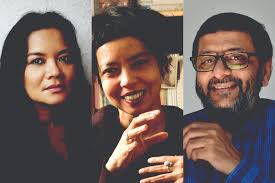
Bernice Chauly, Michelle de Kretser and Vivek Shanbhag spoke in a session entitled ‘Lost Things’. Bernice’s book, Once We Were There focuses on the Reformasi movement in Kuala Lumpur. Her book, she said, was triggered by the jailing of Anwar for sodomy – it’s not talked about. She implied that by writing in English she could say things that others might not dare to put in print. She admits that it is a bleak book. Malaysia, she said, is a fractured country.

Adelaide Day 1 1.15pm

In Michelle de Kretser’s new book The Life to Come, narrative is linked by a recurring character, Pippa, a writer. Five stories unfold: a tale of youthful ambition, a tale of young love, a story about an émigré Australian in Paris who questions her life’s meaning and the commitment of her married female lover, there is a tale of motherhood and betrayal, and finally a tale of the awfulness of dementia.

Vivek Shanbhag’s book Ghachar Ghochar has been translated into English. While this has given him a much wider audience, he mentioned some of the difficulties, most interestingly, I thought, the need to translate into English what is not said. The book is a family drama set in Bangalore. He read a beautiful passage about the pervasiveness of ants.

Various themes were covered in this session. Families: Michelle found writing about families alluring from when, as an undergraduate, she studied kinship lines in Anthropology. Vivek described how, in India, every decision a person makes must be considered through the family, although, he admits, this is starting to change. Violence was another theme. Michelle mentioned that there are not many books about friendships between ‘grown-up’ women – maybe this is why the Eleanor Ferrente novels were so popular. Food was another theme. Bernice saw food as a salve, ‘it’s what binds us together’.

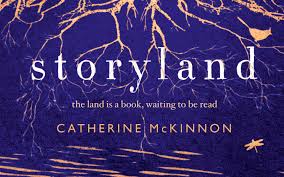
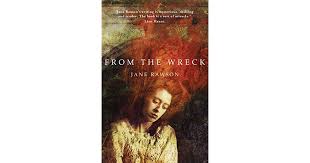
I then went to a session entitled ‘Invented Histories’, where Catherine McKinnon spoke about her novel Storyland, and Jane Rawson spoke about From the Wreck. The structure of Catherine’s book is interesting, with five narrators talking from different times in history (including the future and the far future) bound together by the one environment, Lake Illawarra.  Catherine said that her writing was triggered by asking: What does it mean to be Australian today?

Adelaide writers day 1 2.15 pm 1

Jane Rawson’s book is her second novel. She said that she’s preoccupied by thoughts of ecological disaster and how humans relate to nature. The ‘historical’ character in this story is based on Jane’s great-great grandfather. The character George Hills, survives the sinking of the steamship Admella off the South Australian coast in 1859. He is haunted by memories of the disappearance of a fellow survivor, and his life becomes intertwined with that of a woman from another dimension, who seeks refuge on Earth. Jane said she wasn’t comfortable writing purely in a historical mode, so the woman is an alien: a fascinating mixture of the genres of historical and speculative fiction. Jane said she’s fascinated by our inability to think outside the time in which we are living.

Adelaide writers day 1 2.15 pm 2

The Adelaide Festival Awards for Literature were announced, with the premier present to give the Premier’s Award to Eva Hornung.  http://arts.sa.gov.au/2018-adelaide-festival-awards-literatureOther winners were, Justine Larbalestier, Pam Brown, Tim Winton (who donated his prize money to research into preservation of the Great Barrier Reef), Emily Steel, Annette Marner, Jude Aquilina, Danielle Clode and Edoardo Crismani.

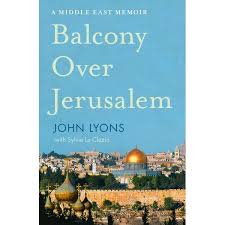
Finally I went to a session entitled ‘War and Peace’, which featured journalist John Lyons and American writer Sarah Sentilles. John has written a memoir, Balcony Over Jerusalem, in which he chronicles 6 years of living in Israel and gives a scathing account of the treatment of Palestinians.

Adelaide writer day 1 5 pm 1

In her book, Draw Your Weapons, Sarah Sentilles explores her responses to photographs of Abu Ghraib, she particularly spoke of the responses of a guard there, who ended up ‘befriending’ prisoners and teaching them to play chess among other things.

The discussion focused on: Is it possible for human beings to live at peace? Both writers started with readings from their books where they described humans observing fighting in war as though it were a spectator sport. John said that people sit in cafes in Israel and when they get a ‘code red’ app on their phones they go to watch the trouble. Sarah spoke of an American conscientious objector to fighting in World War II – and, although a pacifist, she questioned whether, given the atrocities carried out by the Nazis, it is acceptable to opt out of fighting. There was reference to Hannah Arendt’s observations of the Nazi trials and the claim, ‘It wasn’t me who did that. I was carrying out someone else’s orders’. The question of whether we inherit trauma was discussed. Sarah referred to an experiment carried out with mice, where one generation was made to hate the smell of cherry blossoms and this hate was passed on through several generations. Another area of discussion was: can we become more empathetic? Sarah suggested that rather than empathy we need to learn how to respect ‘otherness’ – to build on an ethical system that deals with dis-ease.


Back To School

It’s almost time for Australian schools to reopen after the long summer holiday, and this week’s edition of Cover To Cover on Vision Australia Radio looks at aspects of school life both inside and beyond the gates. The program features poetry, memoir and fiction from the members of Elwood Writers, and will air on Friday evening at 8 o’clock on 1179 AM Melbourne.  For times where you are, check out the program guide here:
https://radio.visionaustralia.org/program-guides

There’s a frequency finder (if you’re in Australia) and a live streaming link (wherever you are in the world) here:
https://radio.visionaustralia.org/

If you’re not able to join us on Friday, the program will be repeated on Sunday, and will be available as a podcast shortly afterwards.

Happy listening!

Coming soon …

Vision Australia Radio‘s weekly literary program, Cover To Cover, will be presenting the work of the Elwood Writers in its Friday 26th January edition. The theme is ‘Back  To School’ and the program will feature poetry, memoir and fiction written by the group, in some cases read on-air by the writers themselves.

We’ve enjoyed collaborating with Tim McQueen, producer and presenter of Cover To Cover, to compile this program, and we’re thrilled to continue to share our work and engage with the VA radio audience and beyond.

And don’t worry if you can’t join us on the day: ‘Back To School’ will be repeated and also made available as a podcast. Details to follow.

For a handy frequency finder, or for more information about the work of Vision Australia Radio, visit them online at: radio.visionaustralia.org


Poetry Matters

Helen McDonald’s poem Deluge is published in Poetry Matters, Issue 31, November 2017 (edited and published by Cheryl Howard).

From the journal’s website: “Poetry Matters is a home-grown print poetry journal that began in Spring 2006. Censorship can take many forms. The inability to find a place of publication can be social censorship. Poetry is freedom.” 

To discover more about Poetry Matters and to find out how to subscribe, click here.

Poetry matters! Hashtag poetry!

Spoken Words in Woodend | Chamber Poets #53

Elwood Writer Helen will be reading two of her poems – “Twilight” and “Loss” – tomorrow afternoon at Chamber Poets in Woodend (Saturday 9th December 2017).

Venue: Woodend Neighbourhood House, 47 Forest St, Woodend, Victoria 3442
Hosted by Myron Lysenko

Featured Poet: Alan Wearne
Open Section
John Flaus Reluctant Poet Segment
Black Forest Smoke

Entry by donation, raffle for book prizes. BYO alcohol. Tea & coffee facilities available, or visit nearby cafes for a cup.

2 p.m. for a 2.30 start

Hashtag poetry!

Plumbline

“I was half way through my MA thesis, or so I thought …”
In this new post from her own blog, Elwood Writer Margaret recounts the first sighting of her plumbline.

Margaret McCaffrey's avatarWRITINGS AND MUSINGS OF MARGARET MCCAFFREY

I was half way through my MA thesis, or so I thought, when my teacher asked: “Margaret, what is your plumbline?” I had no idea – a) what my plumbline was, or b) what a plumbline was.

I knew I wanted to write about my torn relationship with my veteran father who’d died in 1976. But what was my narrative arc, apart from a chronological journey to recover our failed relationship?

What was my plumbline?

One weekend I attended a workshop on ‘Plot’. The teacher explained that plot is different to story. Plot is why something happens. To paraphrase E.M. Forster: story is, “The king died. The queen died.” But plot is, ‘The King died. The queen died of a broken heart.” This happened because that happened.

How did plotting help my story?

I had written about seeingJack’s Daughters”, a play in 1983 about five children and…

View original post 106 more words

Playful Arrangements | from Roomers #59

From Barry’s website, Playful Arrangements, a short piece of fiction that originally appeared in issue #59 of Roomers magazine:

Barry Lee Thompson's avatarBarry Lee Thompson

He’s up with the birds, usually. Before them, even. Reeling at the shock of cold water splashes on pasty skin. This is always where the day starts: staring out into the sky, into the depths of dark yard silence. Waiting for light to peel over the edges. In this way, he considers the things done the day before, and how these activities might easily become those for the day ahead. He could visit once again the strangers who live by the bridge. He could stare along the river’s reach, towards the lumbering shipyards, and at the fishermen dotting the rocks. Or instead he could sit home, thinking. All alone. Thinking forwards and backwards. Circling around all the things that have to be done, and then all the things that could be done, but in the end not doing any of them.

It was the Sunday of the long weekend. The…

View original post 699 more words

The Writing Group

“Before each meeting my body tightens in anticipation of the group’s critical response to my work. But the result is always worth the self-inflicted pain. Knowing an audience awaits, makes me sharpen my work.”
On some of the benefits of membership of a writing group, from Margaret’s blog.
margaretmccaffrey.net

Margaret McCaffrey's avatarWRITINGS AND MUSINGS OF MARGARET MCCAFFREY

It is said that you can’t teach writing. Maybe not. But writers, I believe, can sure help themselves.

Since 2008 I’ve been lucky enough to be a member of Elwood Writers (EW), a group that meets fortnightly in Melbourne’s inner city. I read on one member’s blog that our group is one of the most important assets to her writing.

This goes for me too.

Each EW member is allocated a 30-minute time slot to do with as he/she chooses. There’s an extra half hour for general discussion and rants. We circulate our work – a maximum of 1500 words – by email prior to the meeting. Mostly we devote our segment to the piece we have pre-sent.

Before each meeting my body tightens in anticipation of the groups’ critical response to my work. But the result is always worth the self-inflicted pain. Knowing an audience awaits, makes me sharpen…

View original post 119 more words